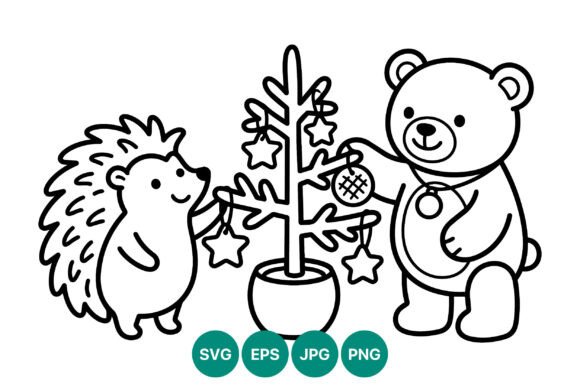
Teddy Bear and Hedgehog Christmas Tree Review
As a designer who has spent years navigating the delicate balance between digital artistry and physical stitching, I approach every new machine embroidery design with a critical eye. When I first opened the file for Teddy Bear and Hedgehog Christmas Tree, my immediate goal was to determine if this piece of digital art would translate into a high-quality finished product or if it would struggle under the pressure of real-world application. This is not just another cute illustration; it is a potential asset for your craft business, a centerpiece for a holiday collection, or a cherished personalized gift. Let’s dig into how this design performs when moved from the screen to the hoop.
First Impressions: Mood and Visual Personality
The moment you load the Teddy Bear and Hedgehog Christmas Tree onto your digitizing software or preview screen, the mood is unmistakable. It exudes a sense of cozy nostalgia that fits perfectly within the winter season. The composition balances two distinct characters—a classic teddy bear and a spiky hedgehog—around a central tree motif. In the realm of Illustrations, character designs can often suffer from being too static or overly complex, but this layout feels dynamic yet grounded.
Visually, the design relies on soft curves and rounded shapes, which are generally forgiving in embroidery. However, the interaction between the bear's fur texture and the hedgehog's quills presents an interesting challenge. If the digitizer has used a mix of fill stitch and satin stitch effectively, the result will be a tactile experience that customers love to touch. If the details are too dense, however, it could lead to puckering on softer fabrics. For an Etsy seller or boutique owner, the visual personality here screams "holiday gift," making it an excellent candidate for seasonal merchandise that needs to stand out on a crowded shelf.
Real-World Application: From Hoop to Home
To truly understand the value of Teddy Bear and Hedgehog Christmas Tree, we need to imagine it in a specific context. Picture yourself preparing a custom embroidered tote bag for a local craft fair. You select a sturdy canvas material, knowing that the weight of the fabric will support the stitch density. As you hoop the design, you notice how the characters interact with the negative space. On a tote bag, this design works beautifully because the flat surface allows the full detail of the hedgehog's spikes and the bear's friendly expression to shine without distortion.
Now, consider a different scenario: a baby onesie. Here, the stakes are higher. The fabric is thin, stretchy, and likely to be washed frequently. While the theme is adorable for baby embroidery, the complexity of the tree decorations might require careful stabilization. If you attempt this on a sweatshirt, the design becomes a statement piece. A sweatshirt embroidery project using this file can elevate a basic garment into a premium handmade product. The key is ensuring the stitch density isn't so heavy that it stiffens the fabric around the chest area, which would ruin the comfort factor.
For those creating embroidered patches, this design offers a great opportunity. Patches allow you to use heavier stabilizers and denser stitching without worrying about fabric distortion. You could produce these as standalone items or sew them onto denim jackets, backpacks, or aprons. The clear outlines and distinct color separation inherent in the design make it suitable for patch production, provided the backing is robust enough to handle the pull of the thread during removal.
Navigating Challenges: Where Caution Is Needed
While Teddy Bear and Hedgehog Christmas Tree is versatile, it is not without its limitations. One area where you must exercise caution is with small hoop sizes. If you are attempting to downscale this design to fit a 4x4 inch hoop, you risk losing the definition of the hedgehog's face and the bear's paws. Tiny lettering or intricate decorative accents on the tree can merge into a muddy blob if the resolution is compromised. Always check the minimum recommended size before committing to a smaller format.
Fabric texture also plays a crucial role. On highly textured fabrics like waffle weave or thick cable knit, the fine details of the tree ornaments may get lost in the weave. Similarly, on dark fabrics, the contrast of the thread colors becomes vital. If the original thread colors are light pastels, they may disappear against a black background unless you use a tonal underlay or switch to brighter shades. Stretchy fabrics, such as jersey or spandex blends, require a cutaway stabilizer to prevent the design from warping after washing.
Another consideration is the frequency of washing. If you are selling this as a kitchen towel or a tea towel, remember that the running stitch or fine satin stitches used for facial features might fray over time with aggressive laundering. It is best suited for items that receive gentle care, such as pillow covers, blankets, or apparel that is hand-washed or machine-washed on a delicate cycle.
Practical Designer Notes for Success
Before you commit to a batch production run or sell a finished item featuring Teddy Bear and Hedgehog Christmas Tree, follow these practical steps to ensure professional results:
- Test on Scrap Fabric First: Never skip the test run. Stitch the design on a scrap piece of the exact fabric you plan to use. This reveals issues with tension, registration, and thread breaks immediately.
- Check Thread Color Contrast: Ensure the colors pop against your chosen background. Use a printable mockup to visualize the final look before buying thread.
- Review Stitch Density: Look closely at the tree branches and the hedgehog's quills. If the areas look too tight, you may need to reduce the density in your software to prevent puckering.
- Confirm Hoop Size: Verify that your machine's hoop can accommodate the full width and height of the design without cutting off any elements.
- Inspect Small Details: Zoom in on the eyes and noses. These tiny areas are prone to thread jams if the needle is dull or the speed is too high.
- Use Proper Stabilizer: Match the stabilizer to the fabric weight. A tear-away might suffice for a tote bag, but a wash-away or cutaway is essential for stretchy garments.
- Verify Licensing: Before selling any finished product or digital embroidery file, confirm the licensing terms. Some designs are for personal use only, while others allow for commercial sales of up to a certain number of items.
Impact on Brand and Customer Trust
Ultimately, the quality of your embroidery reflects directly on your brand. When a customer holds a personalized gift or a small shop product featuring Teddy Bear and Hedgehog Christmas Tree, they are judging the craftsmanship. Clean lines, vibrant colors, and a lack of puckering signal professionalism. Conversely, messy stitching or distorted images can erode trust quickly.
This design has the potential to boost buyer engagement if executed correctly. Its festive nature makes it highly shareable on social media, providing free marketing for your craft business. By paying attention to the nuances of digitizing, fabric selection, and finishing techniques, you transform a simple machine embroidery design into a valuable asset that enhances your portfolio and satisfies your clients. Whether you are a hobbyist making gifts for family or an entrepreneur building a holiday collection, this design offers a warm, inviting aesthetic that resonates with the spirit of the season.