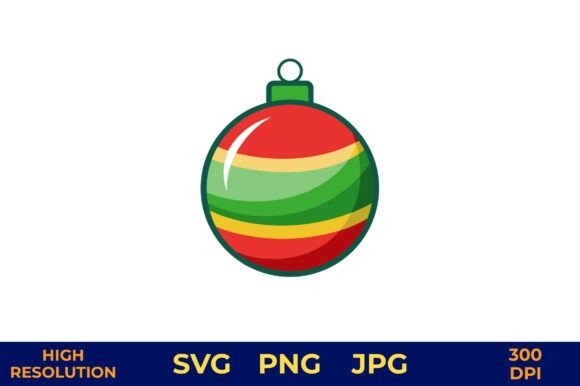
Reviewing the Festive Striped Christmas Ornament Ball
As a designer who has spent countless hours staring at digitized files and watching needles dance across fabric, I have developed a keen eye for what works in the hoop and what looks better on screen. When I first loaded the Festive Striped Christmas Ornament Ball into my software, I was looking for more than just a pretty picture. I needed to know if this illustration would hold up under the mechanical stress of an embroidery machine and whether it would translate into a high-value finished product for my clients.
The initial impression is one of classic holiday charm without the clutter. Many holiday designs suffer from over-digitization, where too many details create a muddy result after stitching. This design, however, relies on clean lines and bold contrast. The striped pattern is iconic, instantly recognizable as a Christmas ornament, which makes it versatile for a wide range of applications. For embroidery designers and small business owners, this clarity is crucial. It means the design can scale down for a baby onesie or up for a tote bag without losing its visual identity.
Real-World Application and Versatility
I recently tested this design while preparing a batch of custom holiday merchandise for a local boutique. The client wanted a cohesive look for their winter collection, ranging from apparel to home goods. The Festive Striped Christmas Ornament Ball became the anchor for this project because of its adaptability. We used it on heavy cotton tote bags, where the fill stitches provided a nice texture against the coarse fabric. The result was sturdy and visually striking, perfect for shoppers carrying holiday gifts.
For sweatshirt embroidery, the design performed exceptionally well. On fleece or French terry, dense designs can sometimes pucker the fabric if not stabilized correctly. However, the balanced stitch density of this ornament allowed it to sit flat on the chest area of a crewneck sweatshirt. It didn’t pull the garment out of shape, which is a common complaint with larger holiday motifs. This makes it an ideal choice for craft businesses looking to offer premium custom apparel that feels as good as it looks.
Beyond apparel, I see this design working beautifully for embroidered patches. The defined edges of the ball shape lend themselves well to a satin stitch border, creating a professional finish that prevents fraying. These patches can be sold as standalone accessories or applied to denim jackets and caps. For Etsy sellers, offering such versatile design assets can significantly boost engagement, as customers love items that can be personalized or moved between different garments.
Navigating Fabric and Hoop Constraints
While the design is robust, it is not without its technical considerations. Any experienced embroiderer knows that fabric texture plays a massive role in the final outcome. On thin or stretchy fabrics, such as lightweight jersey or silk blends, this design requires careful attention to stabilizer choice. A cut-away stabilizer is often necessary to support the weight of the thread, especially if you are using metallic threads to enhance the festive feel. Without proper support, the stripes might distort, ruining the clean aesthetic of the illustration.
Curved surfaces present another challenge. If you are applying this to a cap or a rounded pillow cover, the center of the ornament must be aligned perfectly with the curve. Otherwise, the stripes may appear warped from certain angles. I recommend hooping the item with a strong backing and using a water-soluble topping if the fabric has a nap, like velvet or corduroy. This ensures the stitches sink into the fabric evenly, maintaining the crispness of the striped pattern.
Small hoop sizes also require scrutiny. If you are scaling the Festive Striped Christmas Ornament Ball down for a baby embroidery project, such as a bib or a tiny sock, you must check the stitch count and density. Tiny details can merge together if the needle holes are too close. Always run a test stitch on scrap fabric of the same type before committing to the final product. This step is non-negotiable for maintaining professionalism and avoiding wasted materials.
Enhancing Brand Value and Customer Trust
In the world of handmade products, presentation is everything. A well-executed embroidery design signals quality and care. When customers see a clean, vibrant Festive Striped Christmas Ornament Ball on a tea towel or apron, they perceive higher value. This perception translates directly to brand consistency and trust. For small shop owners, consistent use of high-quality digital embroidery files helps build a recognizable aesthetic that customers come to rely on.
The color palette you choose will dramatically affect the mood. Traditional red and green evoke nostalgia, while silver and blue offer a modern, icy elegance. Testing the design in black and white mockups can help you understand the contrast levels before you even thread the machine. High contrast ensures the design remains visible from a distance, which is essential for items like tote bags or large pillows. Low contrast might look subtle and sophisticated on a monochromatic sweater but could get lost on a busy patterned fabric.
Practical Notes for Designers and Makers
Before integrating this design into your commercial embroidery workflow, consider these practical steps:
- Check Licensing: Always confirm the license terms for any digital embroidery file. Ensure you have the right to sell finished products made with this design, especially if you are an Etsy seller or run a craft business.
- Test Thread Colors: Metallic threads can add sparkle but are prone to breaking. Test tension settings on scrap fabric first. If metallics are too risky, high-sheen polyester threads can mimic the look with greater durability.
- Evaluate Stitch Density: Review the file in your software. If the fill stitch areas are too dense for your fabric, consider adjusting the underlay or reducing density slightly to prevent puckering.
- Consider the Background: This design works best on solid-colored fabrics. Avoid placing it over complex prints where the stripes might clash with the underlying pattern.
- Mockup Variations: Create printable mockups showing the design on various items like aprons, caps, and blankets. This helps customers visualize the final product and increases conversion rates for digital product sellers.
The Festive Striped Christmas Ornament Ball is more than just a seasonal graphic; it is a functional design element that, when used correctly, elevates the perceived quality of any handmade item. Whether you are decorating a single personalized gift or producing a line of small shop products, this illustration offers the balance of simplicity and festivity that resonates with buyers. By paying attention to fabric choice, stabilization, and thread selection, you can ensure that every stitch contributes to a polished, professional finished product that stands out in a crowded market.